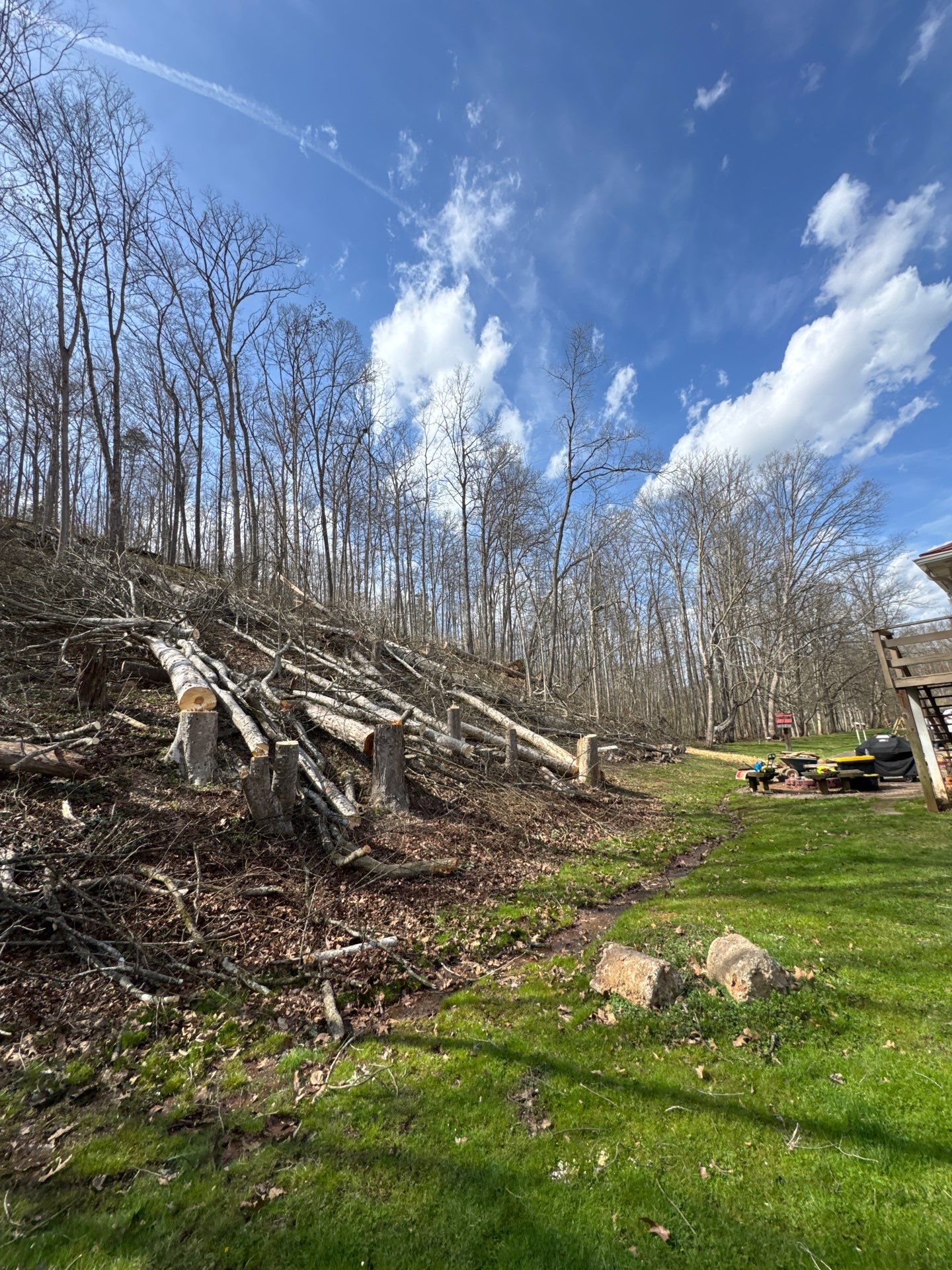
Project in Putnam County, WV
March 2026
Job Description – Emergency Tree Hazard Mitigation (Hillside Property) Jones Empire Service Experts was called in following a tree failure that resulted in significant impact to a residential structure. After the initial incident, multiple additional trees remained on the hillside, leaning toward the home and creating an ongoing safety concern for the homeowner and neighboring property. Due to the instability of the remaining trees and the risk of further damage, our team was hired to perform preventative hazard mitigation to eliminate the threat of additional tree strikes. The scope of work included: • Assessing all surrounding trees with potential to impact the structure • Cutting back and removing hazardous trees leaning toward the home • Repositioning and securing trees where possible to redirect growth away from the structure • Performing controlled cutting to relieve weight and reduce failure risk • Maintaining safe working conditions in a high-risk hillside environment All work was performed with a focus on: • Protecting the structure from further damage • Reducing risk to the homeowner and surrounding properties • Stabilizing the immediate area following the initial tree impact This project required careful planning, controlled execution, and the use of specialized techniques to ensure that no additional trees could strike the home moving forward.
Excavator / Backhoe (Best Option) • Used for controlled pulling power • Can reposition, push, and stabilize • Ideal with thumb attachment • Skid Steer (Secondary) • Helps with positioning and light pulls • Not ideal for major lean correction alone • Winch System (VERY IMPORTANT) • Hydraulic winch or truck-mounted winch • Minimum 10,000–20,000 lb capacity • Gives controlled tension instead of jerking • Truck / Anchor Machine • Dually, dump truck, or machine used as anchor point • Must be positioned uphill or stable ground ⸻ 🪢 RIGGING & PULLING MATERIALS • Static Rope (Bull Rope) • 5/8” or 3/4” arborist rope • High tensile strength (20,000–30,000 lbs) • Steel Cable (For heavy pulls) • Safer for extreme tension • Less stretch than rope • Tow Straps / Tree Saver Straps • Prevents damage to tree • Wrap around trunk for pulling point • Chains (Grade 70 or higher) • For secure connection points • Used when attaching to machines ⸻ ⚙️ CONTROL & REDIRECTION • Snatch Blocks (Pulley System) • Doubles pulling power • Redirects pull angle (CRITICAL on hillsides) • Come-Alongs (Manual Winch) • Fine adjustment and tension control • Ratchet Binders • Lock tension in place once tree is repositioned ⸻ 🪵 TREE CONTROL MATERIAL • Tag Lines • Smaller ropes used to guide tree direction • Wedges • Prevent tree from settling back • Helps hold position during adjustment • Blocking / Cribbing (Wood) • Stabilizes base if needed ⸻ 🛠️ CUTTING & PREP TOOLS • Chainsaws (Multiple Sizes) • For relieving tension • Cutting limbs before pulling • Pole Saw / Extended Saw • For overhead limb removal before pull ⸻ 🦺 SAFETY EQUIPMENT (DON’T SKIP) • Helmets with Face Shields • Cut Resistant Chaps • Gloves • High Visibility Gear • Steel Toe Boots ⸻ ⚠️ KEY SETUP METHOD (IMPORTANT) 1. Set anchor point ABOVE the tree (uphill if possible) 2. Attach rope/cable as HIGH as possible on trunk 3. Use snatch block to control direction 4. Apply slow, steady tension (NO jerking) 5. Remove weight (limbs) BEFORE heavy pull 6. Lock position with binder or secondary tie-off, Land clearing
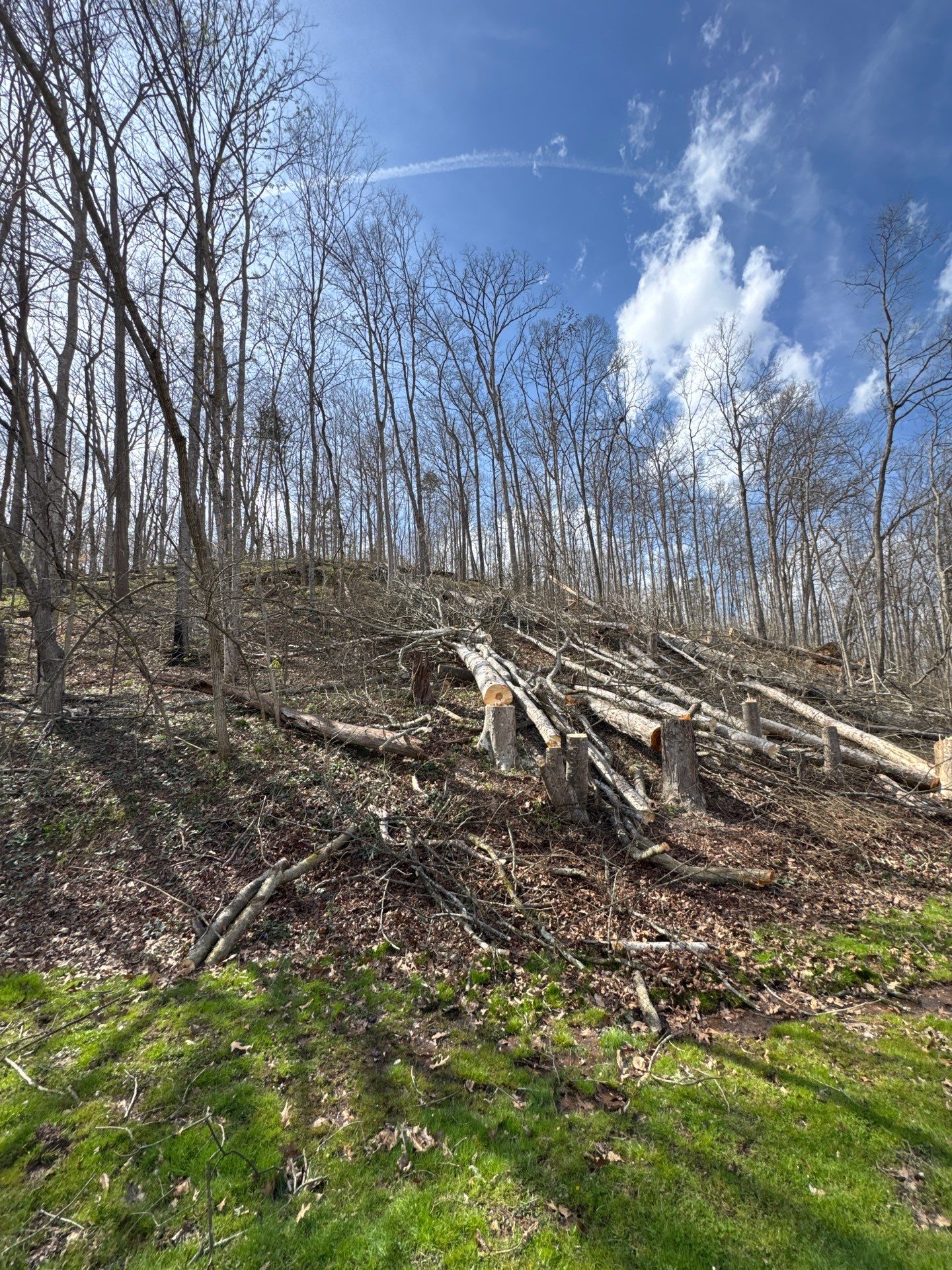
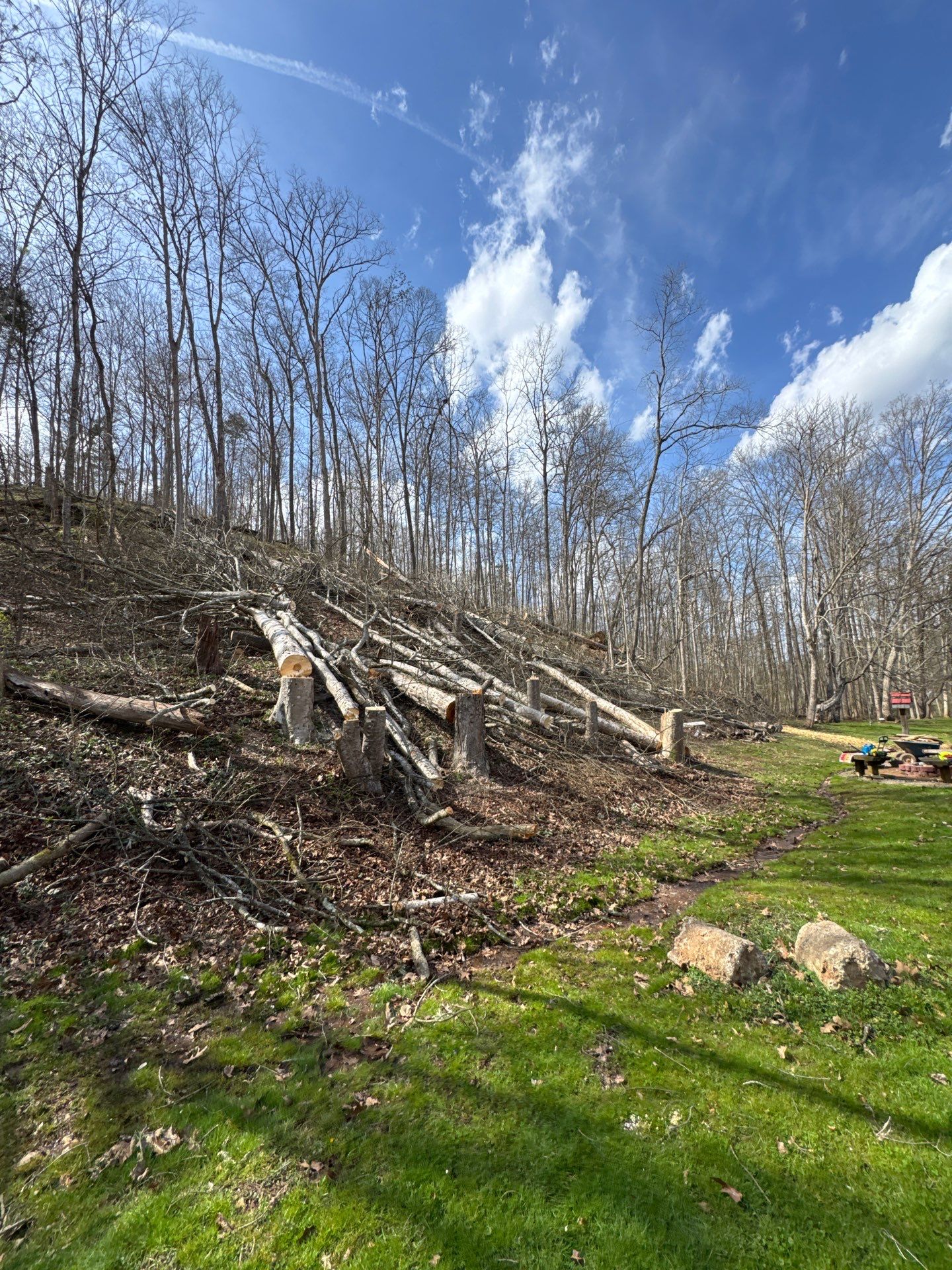
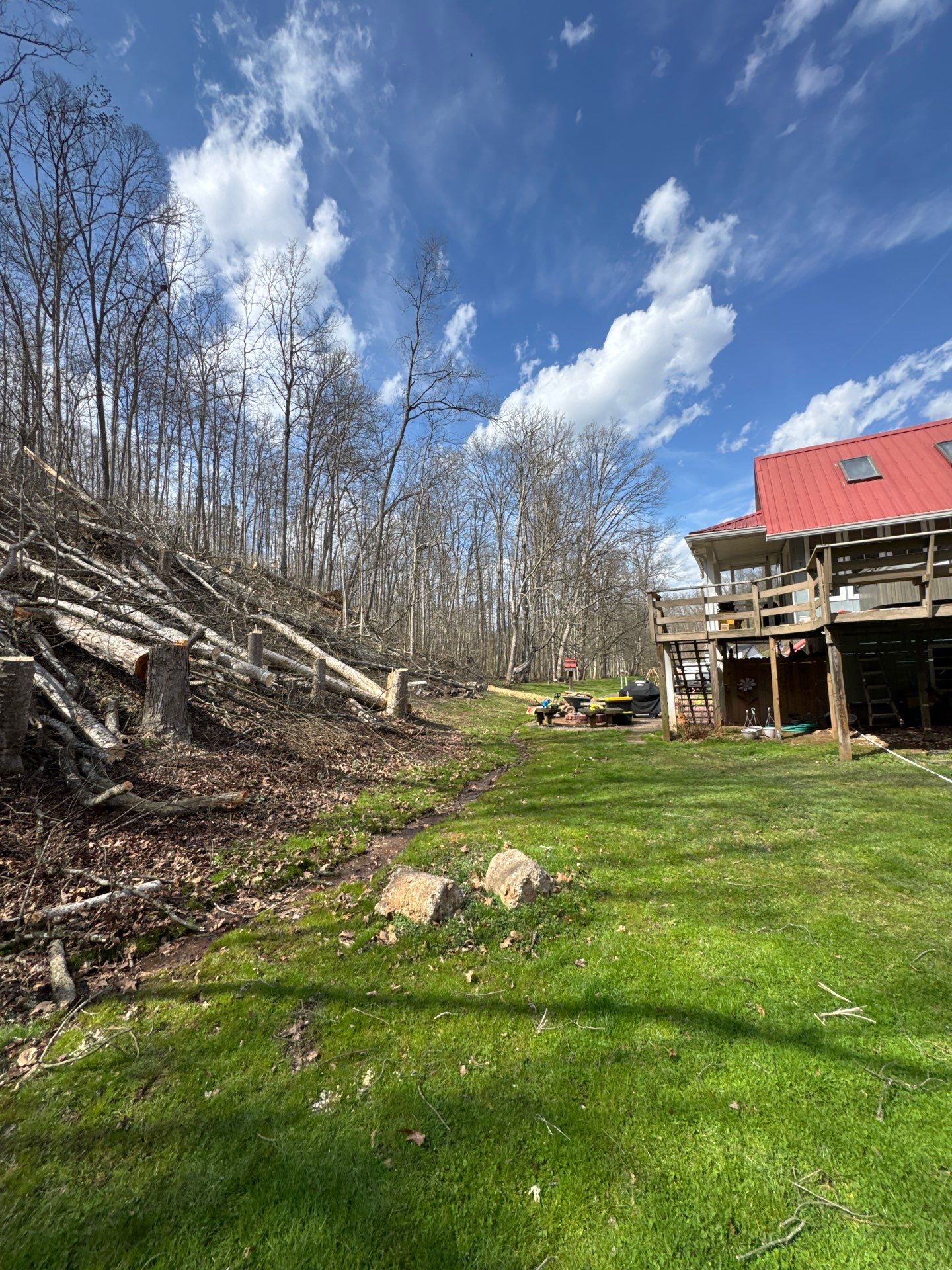
Project in Putnam County, WV
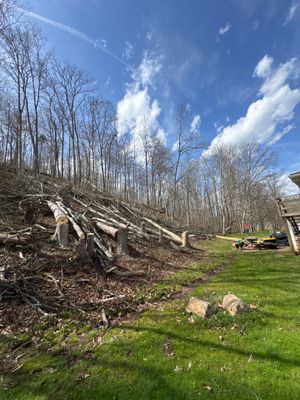
Job Description – Emergency Tree Hazard Mitigation (Hillside Property) Jones Empire Service Experts was called in following a tree failure that resulted in significant impact to a residential structure. After the initial incident, multiple additional trees remained on the hillside, leaning toward the home and creating an ongoing safety concern for the homeowner and neighboring property. Due to the instability of the remaining trees and the risk of further damage, our team was hired to perform preventative hazard mitigation to eliminate the threat of additional tree strikes. The scope of work included: • Assessing all surrounding trees with potential to impact the structure • Cutting back and removing hazardous trees leaning toward the home • Repositioning and securing trees where possible to redirect growth away from the structure • Performing controlled cutting to relieve weight and reduce failure risk • Maintaining safe working conditions in a high-risk hillside environment All work was performed with a focus on: • Protecting the structure from further damage • Reducing risk to the homeowner and surrounding properties • Stabilizing the immediate area following the initial tree impact This project required careful planning, controlled execution, and the use of specialized techniques to ensure that no additional trees could strike the home moving forward.