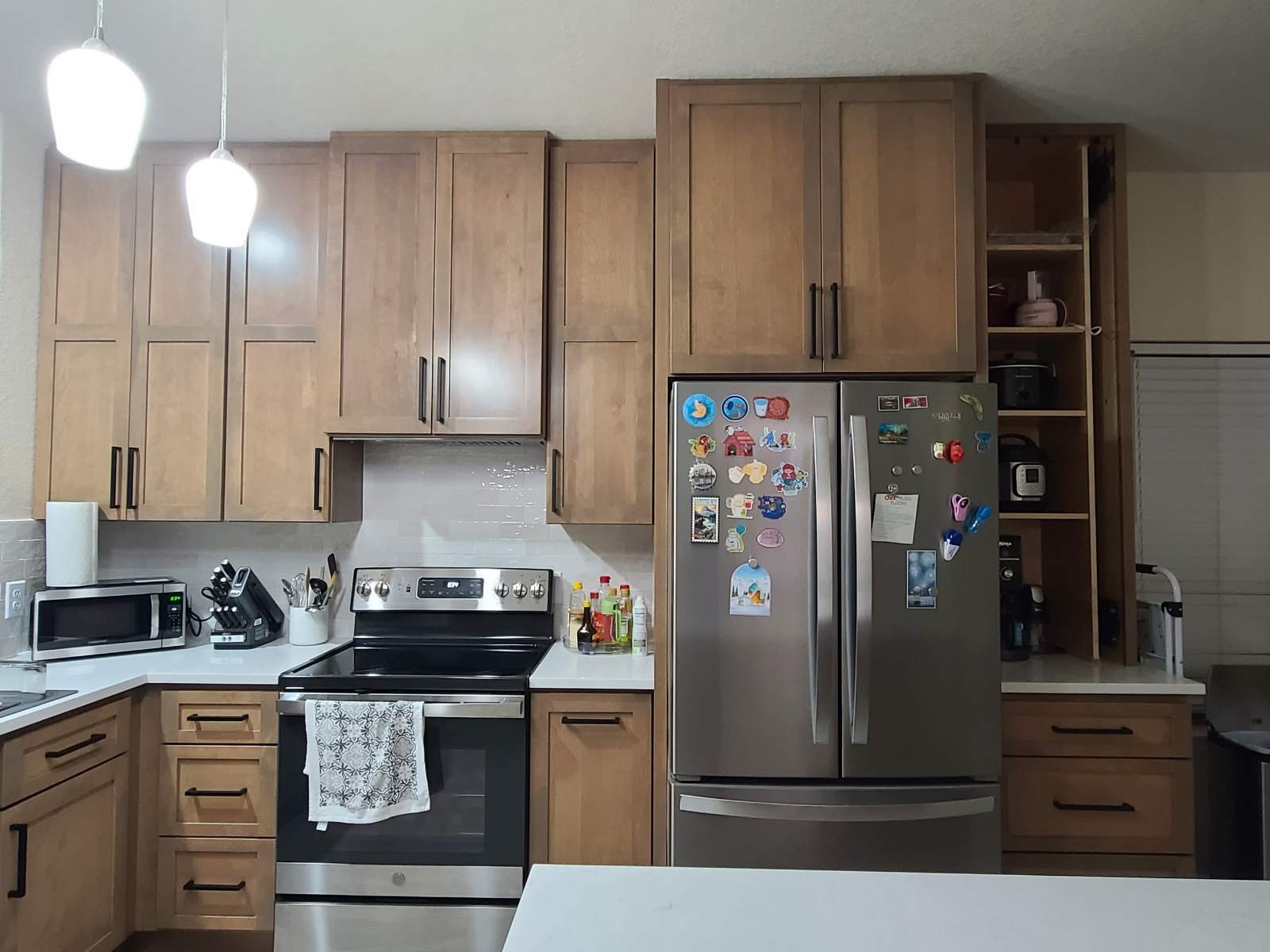
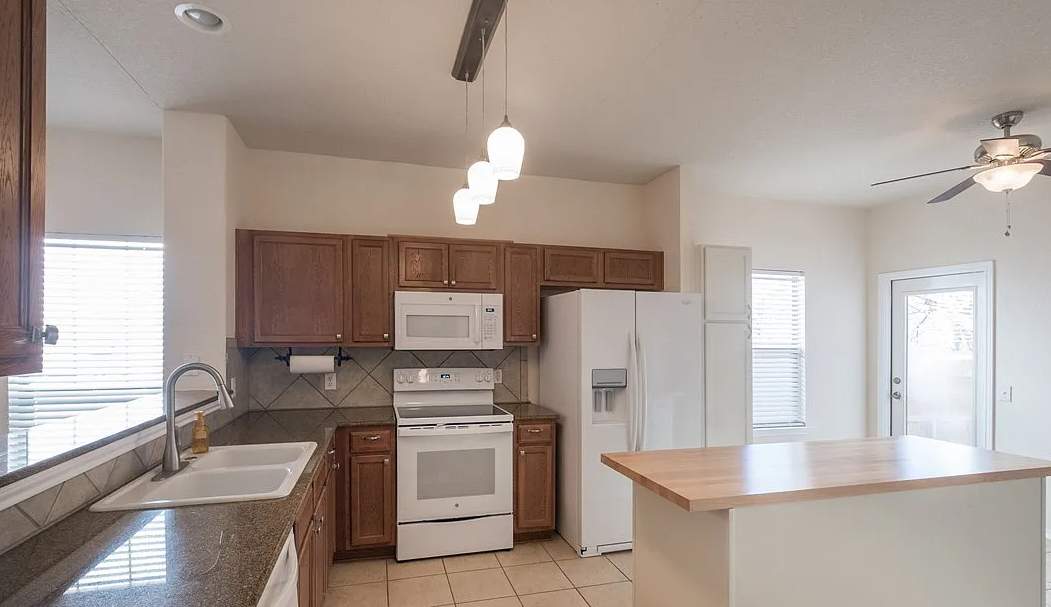
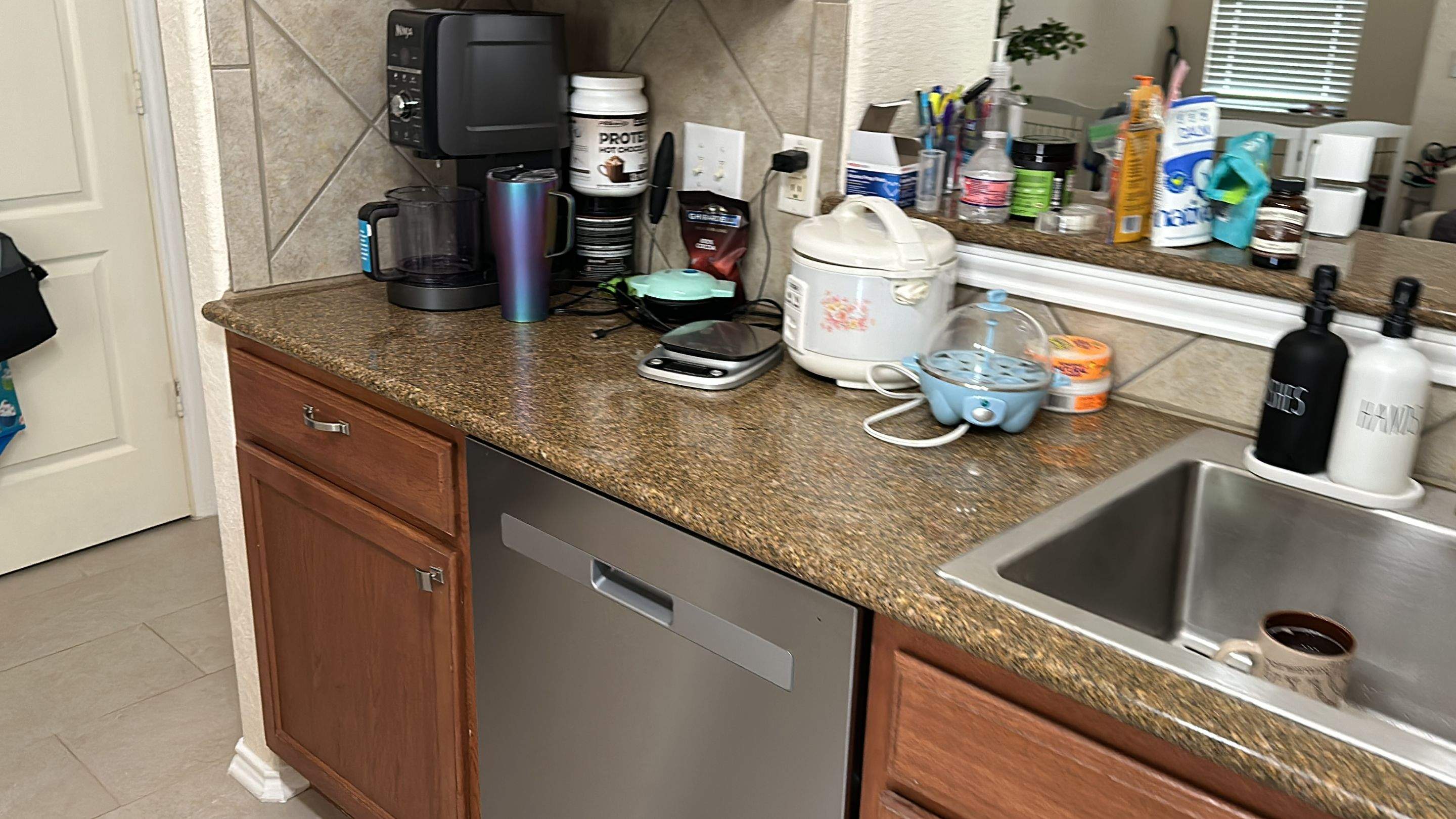
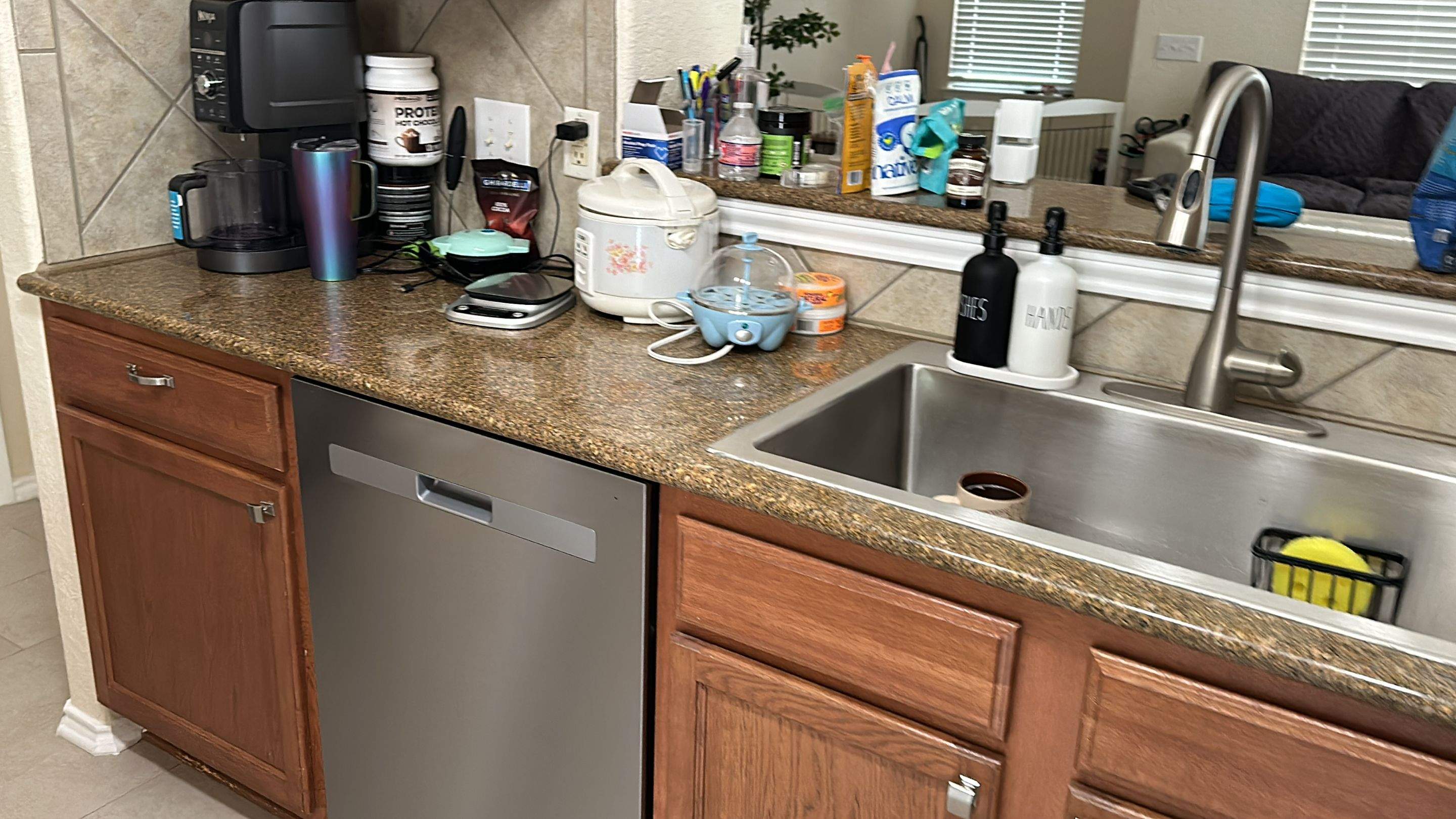
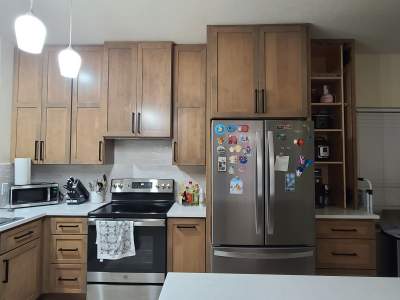
The old kitchen had a traditional builder-grade look with heavier wood cabinetry and busier finishes, while the new kitchen has a warm transitional design with cleaner lines, a brighter palette, and a more open, modern layout
July 2026
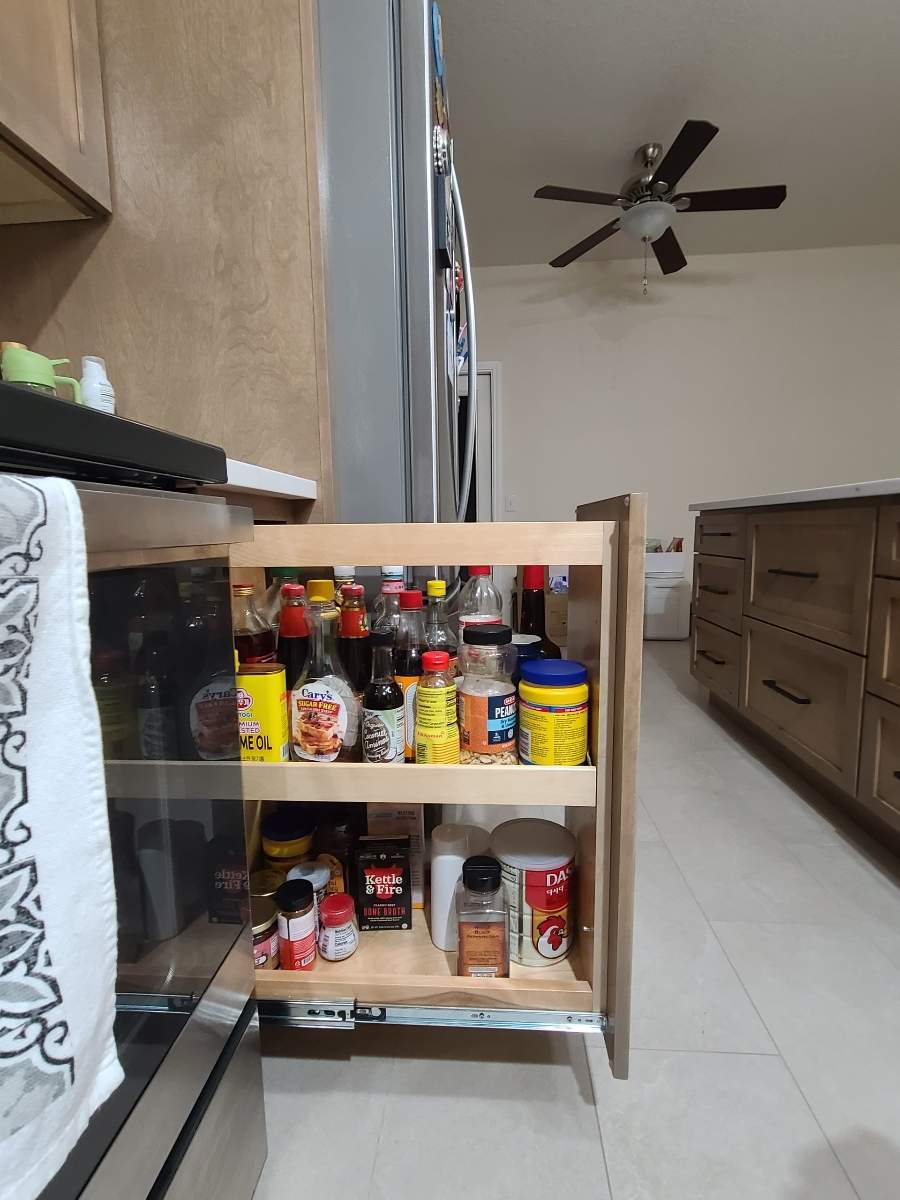
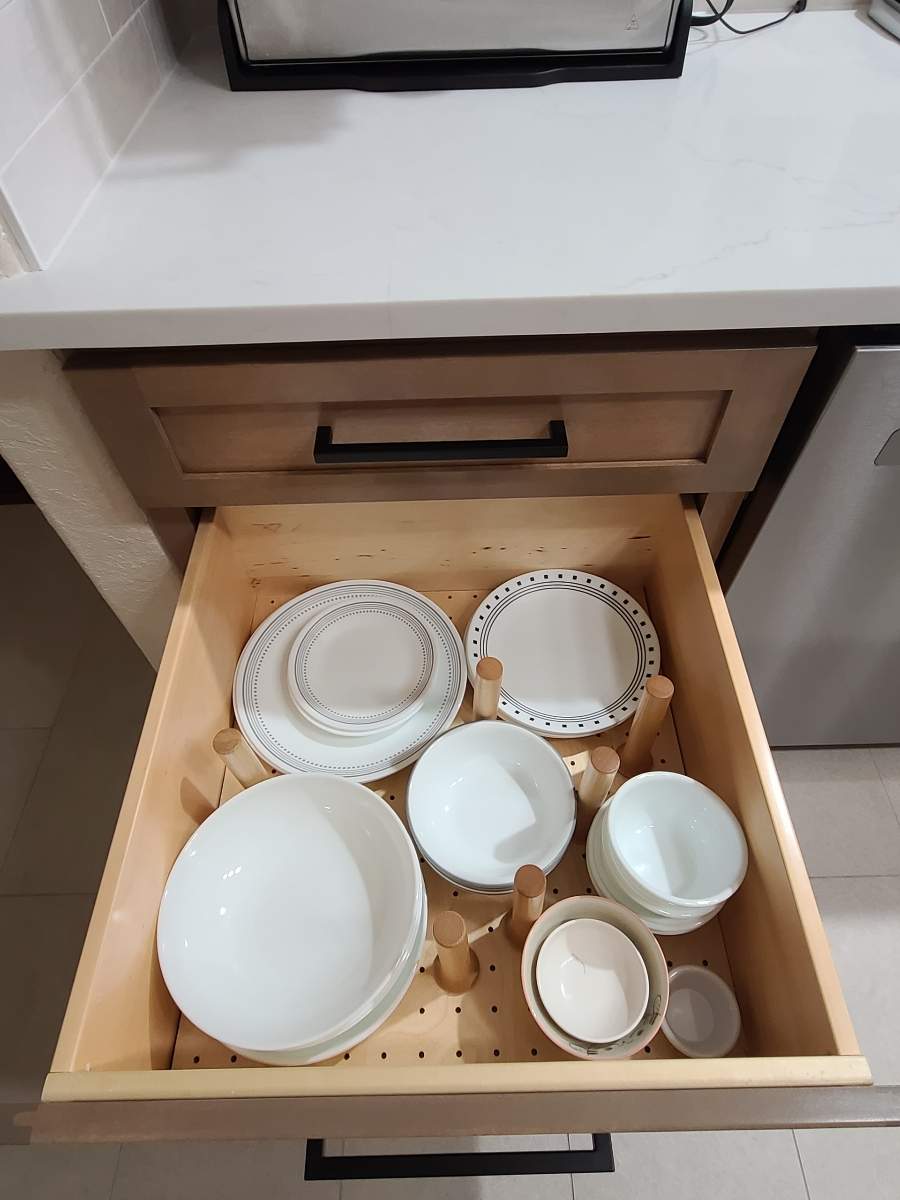
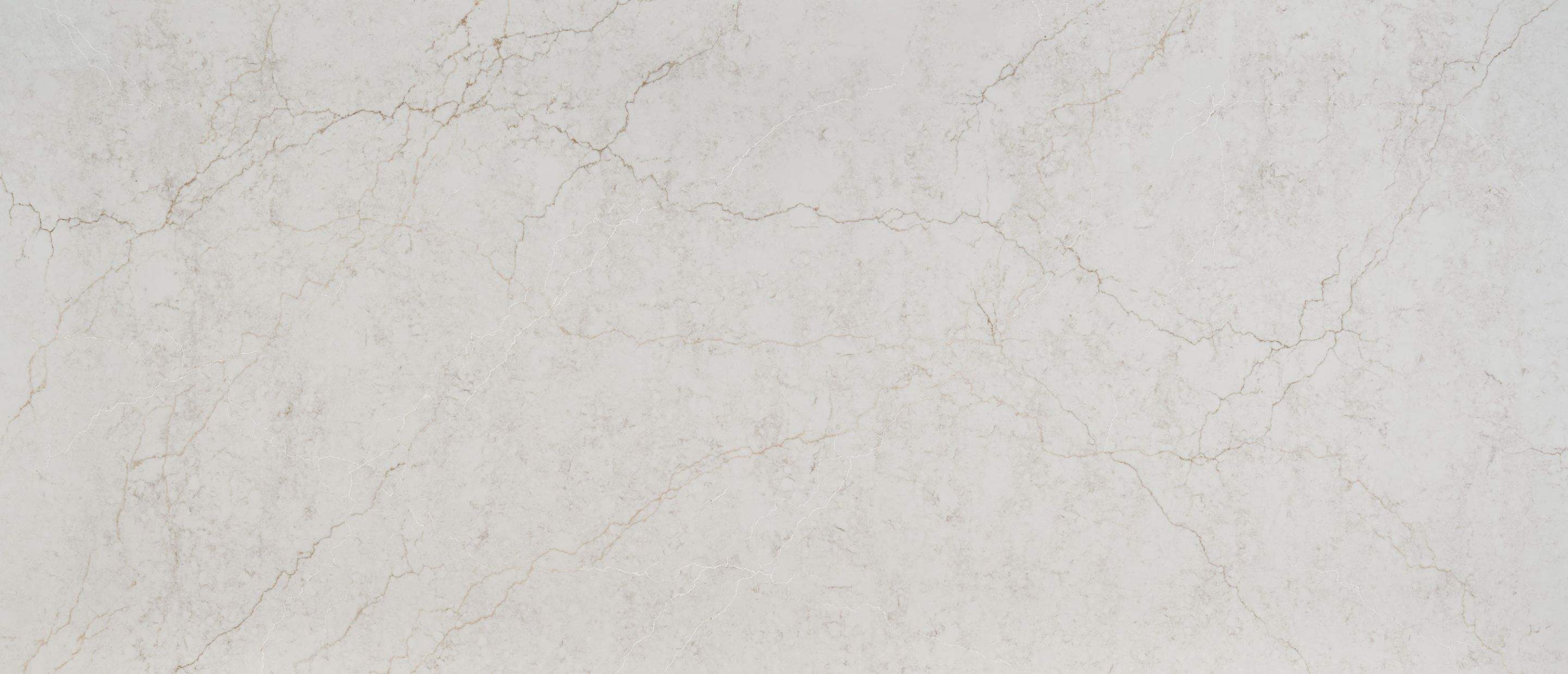
The old kitchen reads as a more traditional builder-grade style, while the new kitchen shifts into a modern warm transitional style. What the old style looks like From the older photo, the design feels: Traditional / early builder-grade, with raised-panel medium-tone wood cabinets. Busier visually, because of the smaller workspace, angled corner sink area, short backsplash patterning, and speckled countertops. Heavier and more segmented, since the cabinetry, counter lines, and layout break the room into smaller zones. More utilitarian than styled, with the finishes doing the basic job but not creating a strong focal point. In plain terms, the old kitchen feels practical, standard, and a bit dated. What the new style looks like The updated kitchen feels much more: Transitional, because it blends modern elements with warm wood tones rather than going ultra-modern and stark. Cleaner-lined, with flatter cabinet fronts, simpler hardware, and fewer visual interruptions. Brighter and more open, thanks to the large white island, lighter surfaces, and better flow. More upscale and intentional, with coordinated pendant lighting, bar seating, stainless appliances, and a stronger focal point around the island. Warm contemporary, because the wood keeps it inviting while the white counters and simplified details make it current.
Kitchen Remodel
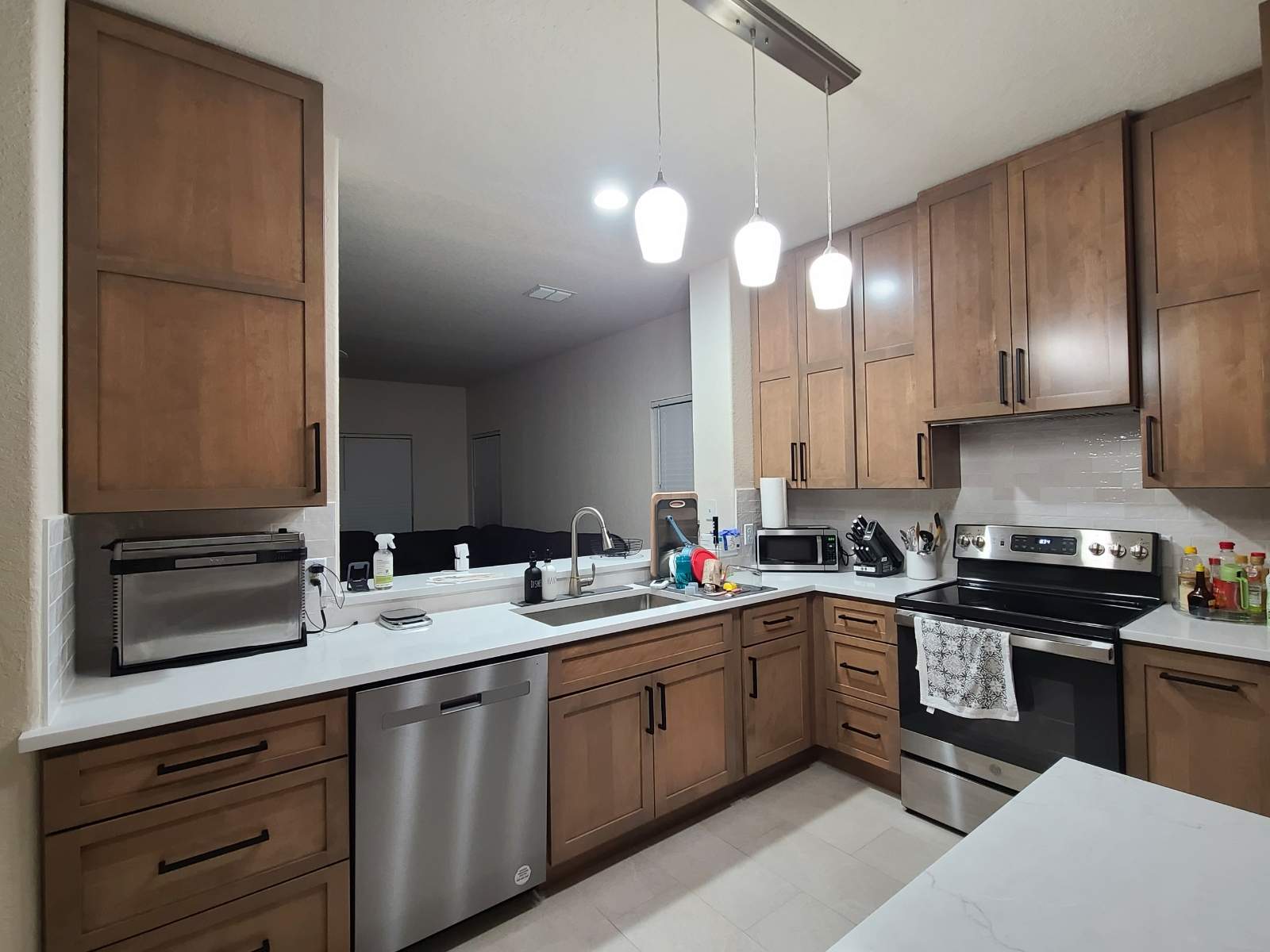
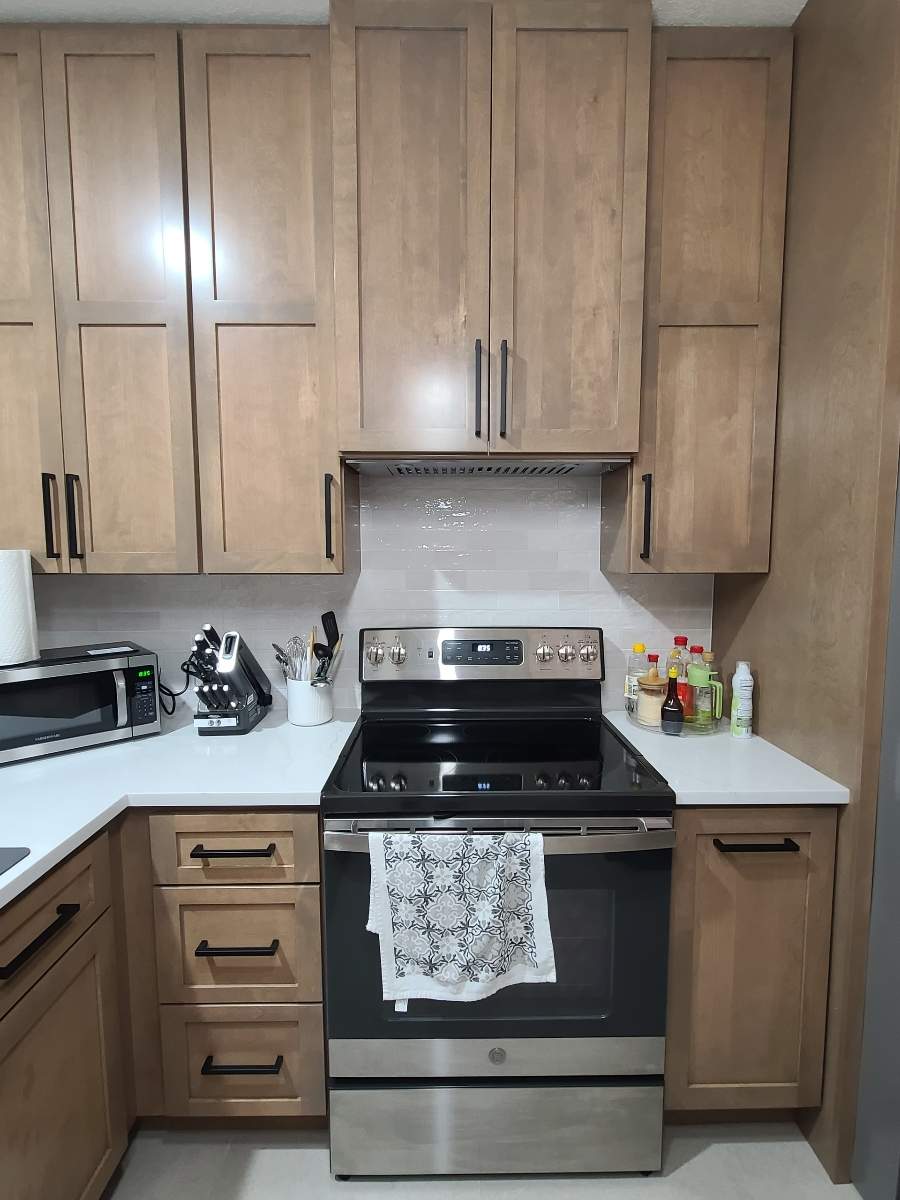
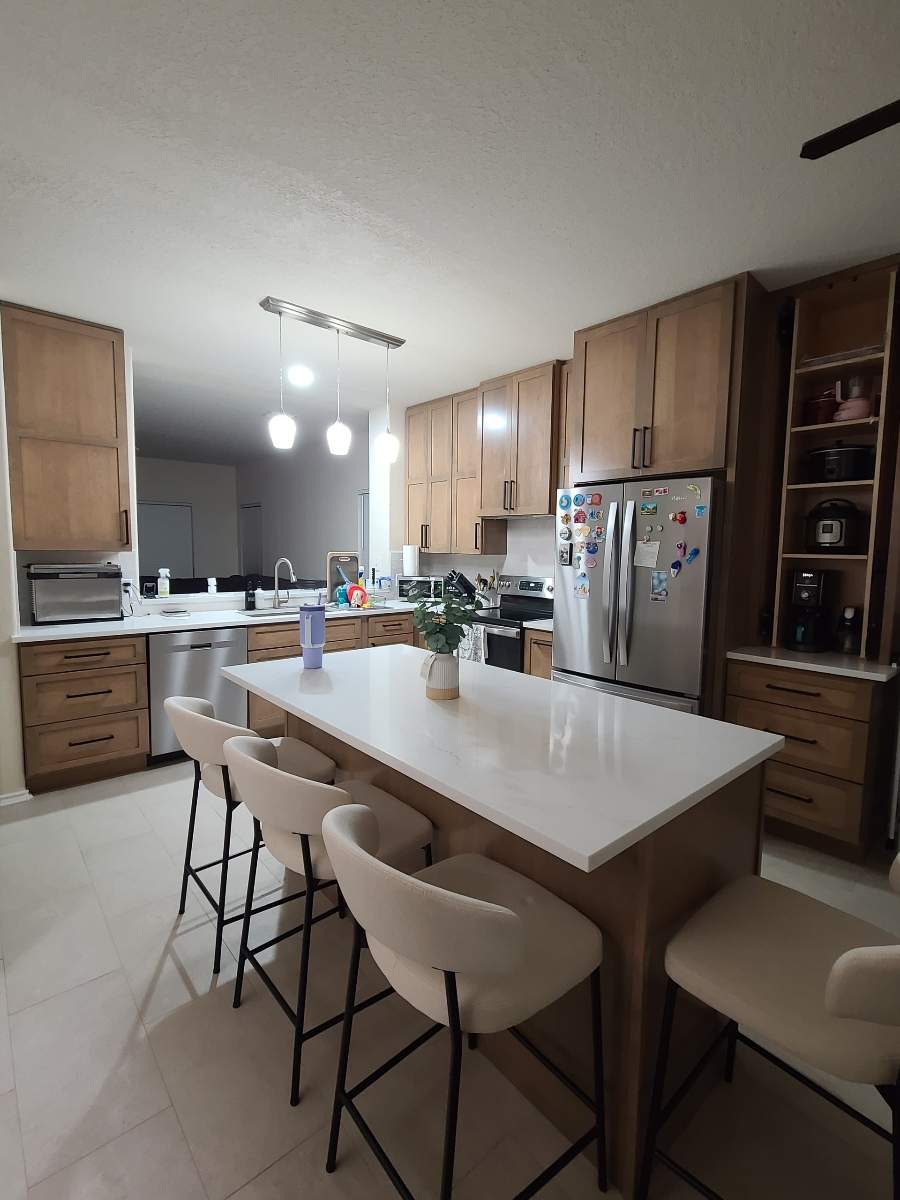
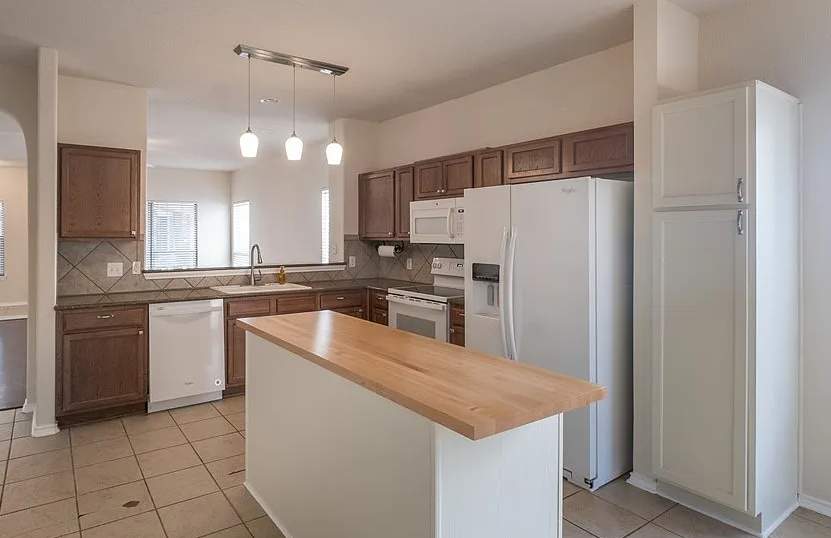
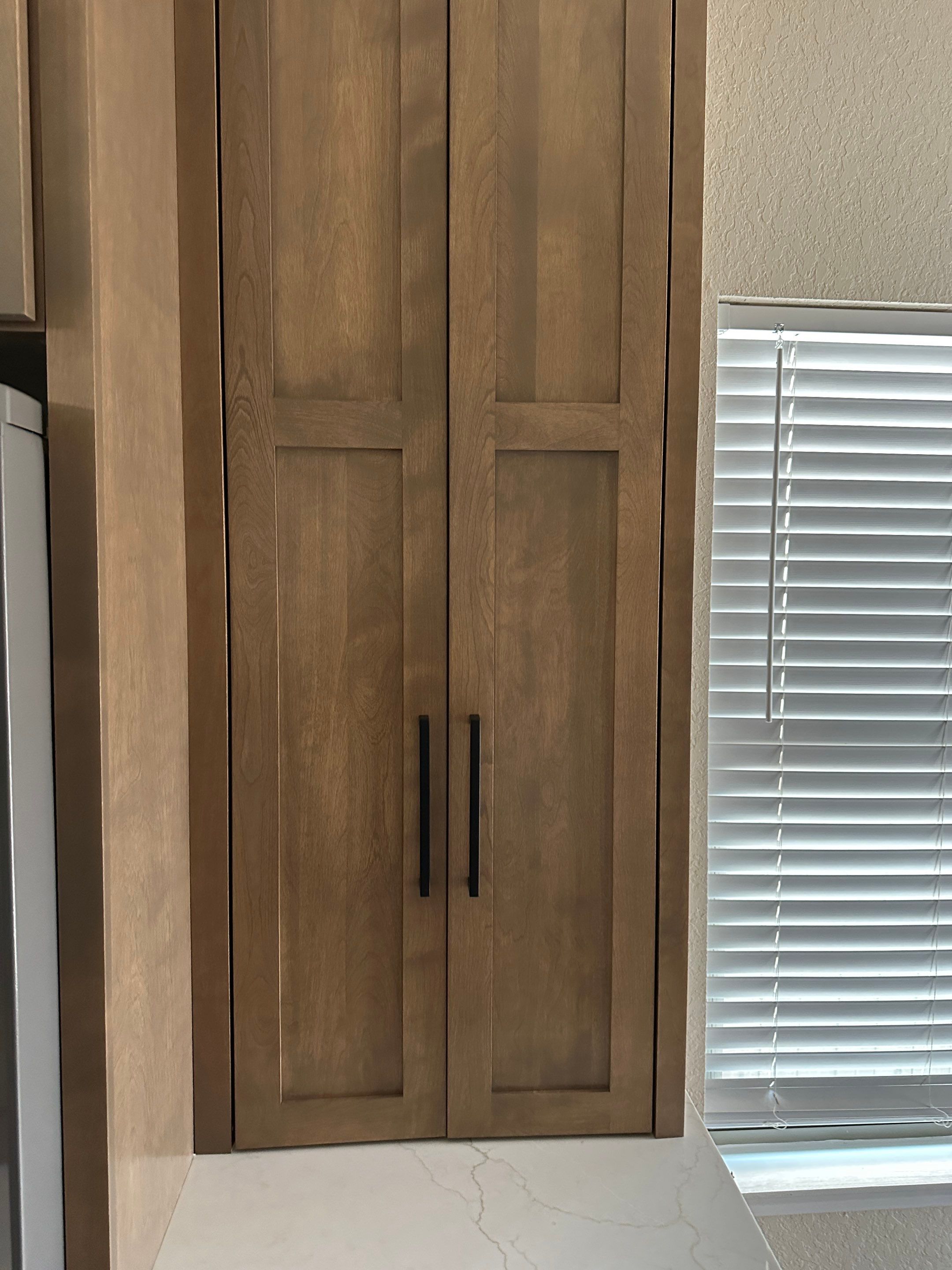
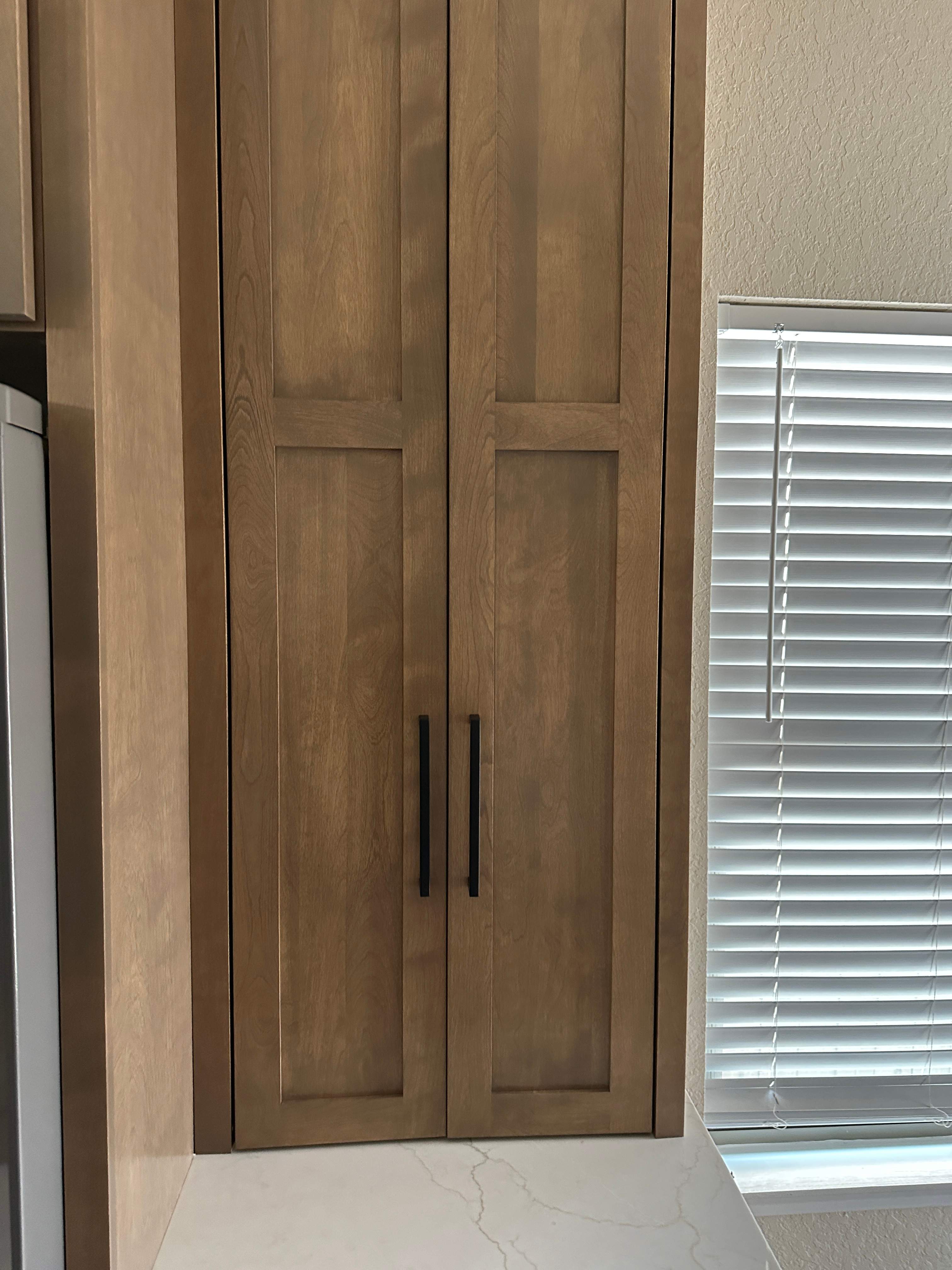
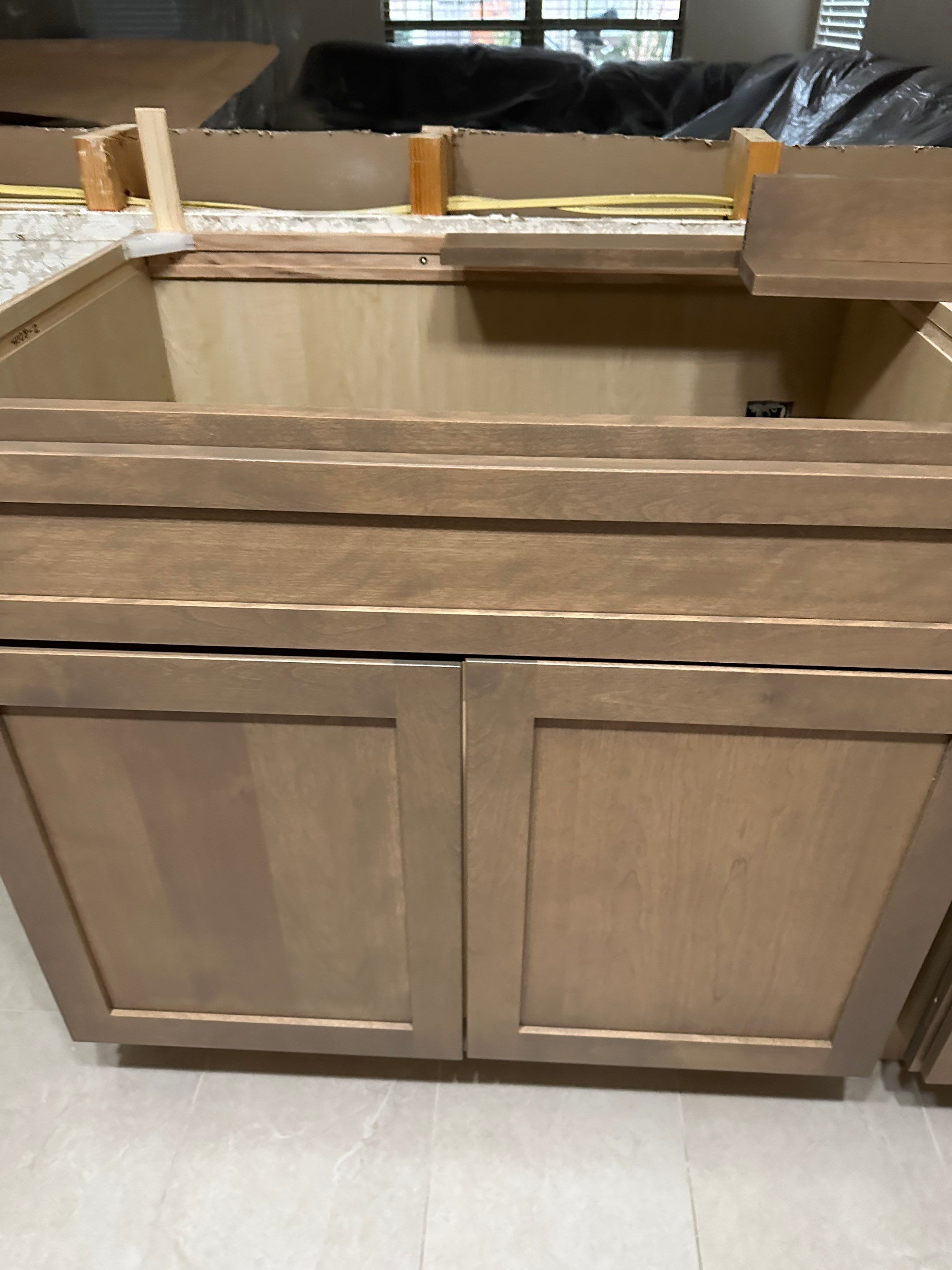
The old kitchen had a traditional builder-grade look with heavier wood cabinetry and busier finishes, while the new kitchen has a warm transitional design with cleaner lines, a brighter palette, and a more open, modern layout